
A Tube Pipe Galvanizing Plant is used to apply a protective zinc coating on steel pipes and tubes through the hot-dip galvanizing process. In this process, cleaned steel pipes are immersed in molten zinc at high temperature so that a strong metallurgical bond forms between the steel and zinc layer, protecting the pipes from corrosion and increasing their service life.
Pipe galvanizing plants are widely used for producing galvanized pipes for water supply systems, construction, scaffolding, fencing, gas pipelines, and structural applications.
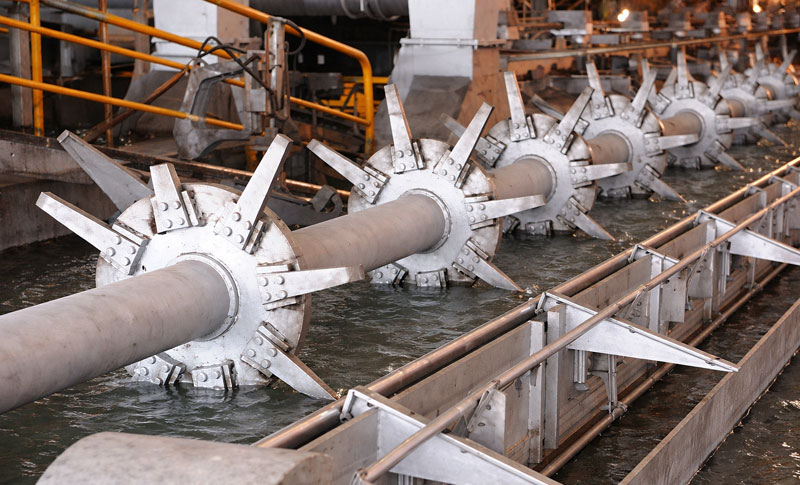
The galvanizing kettle must be designed according to the maximum pipe length and pipe diameter that will be processed in the plant.
Typical Kettle Sizes for Pipe Galvanizing Plants:
| Plant Type | Typical Kettle Size |
|---|---|
| Small pipe galvanizing plant | 6 m × 1.2 m × 1.5 m |
| Medium pipe galvanizing plant | 7–8 m × 1.5 m × 1.8 m |
| Large pipe galvanizing plant | 9–10 m × 1.8 m × 2.0 m |
Most industrial galvanizing kettles used for structural steel fall within 10–15 m length, 1.5–3.5 m width, and 2.5–4.5 m depth, depending on the size of components being galvanized.
For pipe galvanizing plants, kettle length is usually selected based on standard pipe lengths (generally 6 m) used in the pipe manufacturing industry.
Typical pipe galvanizing plants are designed to process:
Some advanced plants can also galvanize square and rectangular tubes used in structural applications.
I. Pipe Length and Diameter
The kettle size must accommodate the maximum pipe length and allow safe immersion and removal of pipes.
The kettle should be slightly longer to allow easy dipping and proper zinc flow.
II. Pipe Handling and Automation System
Pipe galvanizing plants usually use specialized automation equipment such as:
These systems improve productivity and reduce manual handling of pipes
III. Inner and Outer Zinc Coating System
Unlike structural galvanizing, pipes require coating both inside and outside surfaces.
Common technologies include:
These systems remove excess zinc and ensure uniform coating thickness.
IV. Zinc Temperature Control
The zinc bath must be maintained at stable temperature.
Typical operating range:
Stable temperature helps achieve proper coating thickness and reduces zinc consumption.
V. Production Capacity Planning
Production capacity depends on:
Typical plant capacities range from:
Over the years, we have had the privilege of partnering with leading infrastructure and engineering companies who trust our expertise and capabilities. Our valued clients include