
Radadia Engineering is a trusted Solar Structure Galvanizing Plant Equipment Supplier, providing advanced hot-dip galvanizing solutions for manufacturers involved in solar mounting structures and renewable energy infrastructure. With strong engineering expertise and decades of experience in galvanizing technology, the company designs and supplies reliable equipment that helps protect solar steel structures from corrosion and environmental damage.
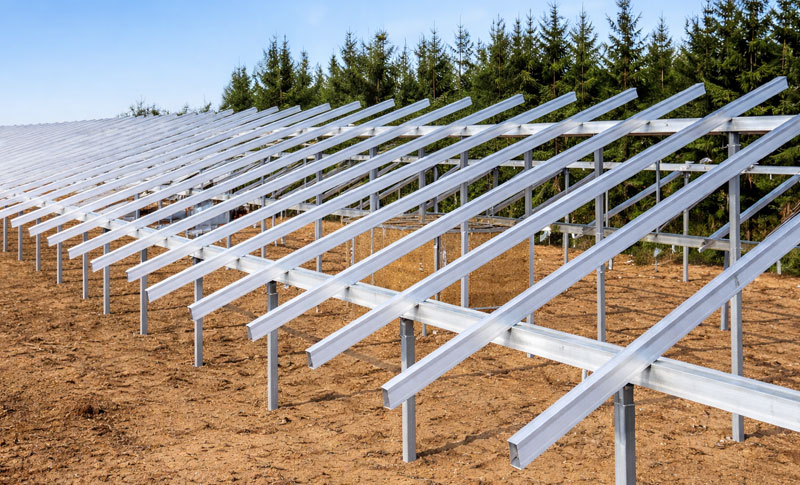
A Solar Structure Galvanizing Plant is developed to coat fabricated steel components used in solar installations with a protective zinc layer. During the hot-dip galvanizing process, solar mounting components are dipped into molten zinc, creating a metallurgical bond between zinc and steel. This coating protects steel surfaces from rust and significantly improves the durability of solar support structures installed outdoors.
Solar mounting systems operate in open environments where they face rain, humidity, temperature changes, wind, and airborne pollutants. Applying a galvanized coating helps the steel withstand these conditions and maintain structural strength for many years. Galvanized coatings are widely used in solar mounting systems because they provide excellent corrosion resistance and long service life for steel components used in solar power projects.
Radadia Engineering – Solar Structure Galvanizing Plant Equipment Supplier
The galvanizing kettle size mainly depends on:
Since solar structures are usually 4–8 m long, a medium-size galvanizing kettle is generally sufficient.
| Plant Type | Kettle Size (L × W × D) |
|---|---|
| Small solar structure plant | 6 m × 1.2 m × 1.6 m |
| Medium solar structure plant | 7–9 m × 1.5 m × 2 m |
| Large solar mounting structure plant | 10–12 m × 1.8 m × 2.2 m |
Industrial galvanizing kettles used for structural fabrication typically range 9–18 m in length, 1.5–2.4 m in width, and 1.8–3 m in depth, depending on the size of steel components.
For most solar structure manufacturers, a 7–9 m kettle is commonly used because it suits solar mounting rails, C-channels, and medium structural members.
The zinc bath must be large enough to maintain stable temperature and coating quality.
| Kettle Size | Zinc Capacity |
|---|---|
| 6 m kettle | 60–80 tons |
| 9 m kettle | 80–120 tons |
| 12 m kettle | 120–160 tons |
A large zinc bath helps maintain temperature stability during dipping cycles.
| Capacity | Kettle Length |
|---|---|
| 15,000 MT/year | 6–7 m |
| 25,000 MT/year | 8–9 m |
| 40,000 MT/year | 10–12 m |
Example configuration for 25,000–30,000 MT/year solar structure plant: