
A Scaffolding Galvanizing Plant is designed to apply a protective zinc coating on scaffolding components such as scaffolding pipes, couplers, frames, and accessories using the hot-dip galvanizing process. In this process, cleaned steel scaffolding parts are immersed into molten zinc so that the zinc forms a metallurgical layer over the steel surface, protecting it from rust and corrosion during long-term outdoor use.
Scaffolding pipes commonly used in construction are typically 48.3 mm diameter steel tubes with lengths ranging from about 1 m to 6 m, depending on the scaffolding system used in construction projects.
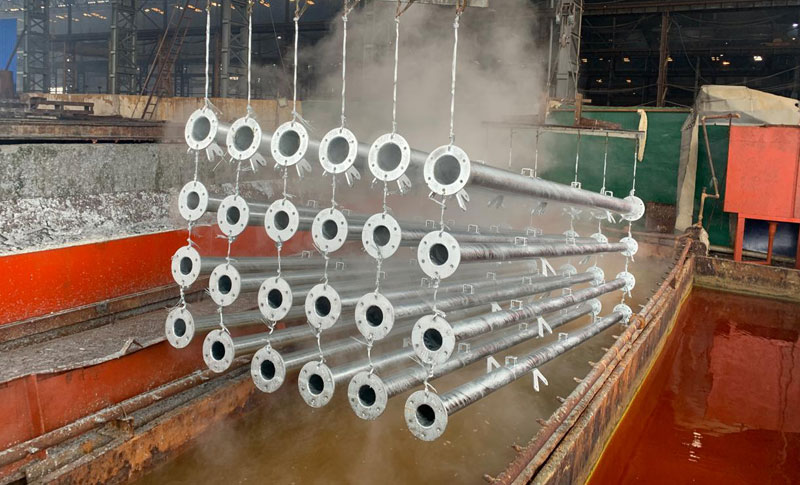
Since scaffolding tubes generally have a maximum length of around 6 meters, the galvanizing kettle must be long enough to fully immerse the pipes.
Typical Kettle Sizes for Scaffolding Galvanizing Plants:
| Plant Capacity | Typical Kettle Size |
|---|---|
| Small scaffolding galvanizing plant | 6 m × 1.2 m × 1.5 m |
| Medium capacity plant | 7–8 m × 1.5 m × 1.8 m |
| Large scaffolding galvanizing plant | 9–10 m × 1.8 m × 2.0 m |
In the galvanizing industry, kettle dimensions usually fall within 9–18 m length, 1.5–2.4 m width, and 1.8–3.6 m depth, depending on the size of steel parts being galvanized.
For scaffolding manufacturing plants, kettles between 6 m and 10 m length are commonly suitable.
A scaffolding galvanizing plant normally processes:
1. Maximum Pipe Length
The kettle size should be selected according to the maximum scaffolding pipe length.
Typical scaffolding pipe length:
Therefore the kettle should be slightly longer than the pipe length to allow easy dipping.
2. Production Capacity
Typical scaffolding galvanizing plants operate between:
Capacity depends on: