
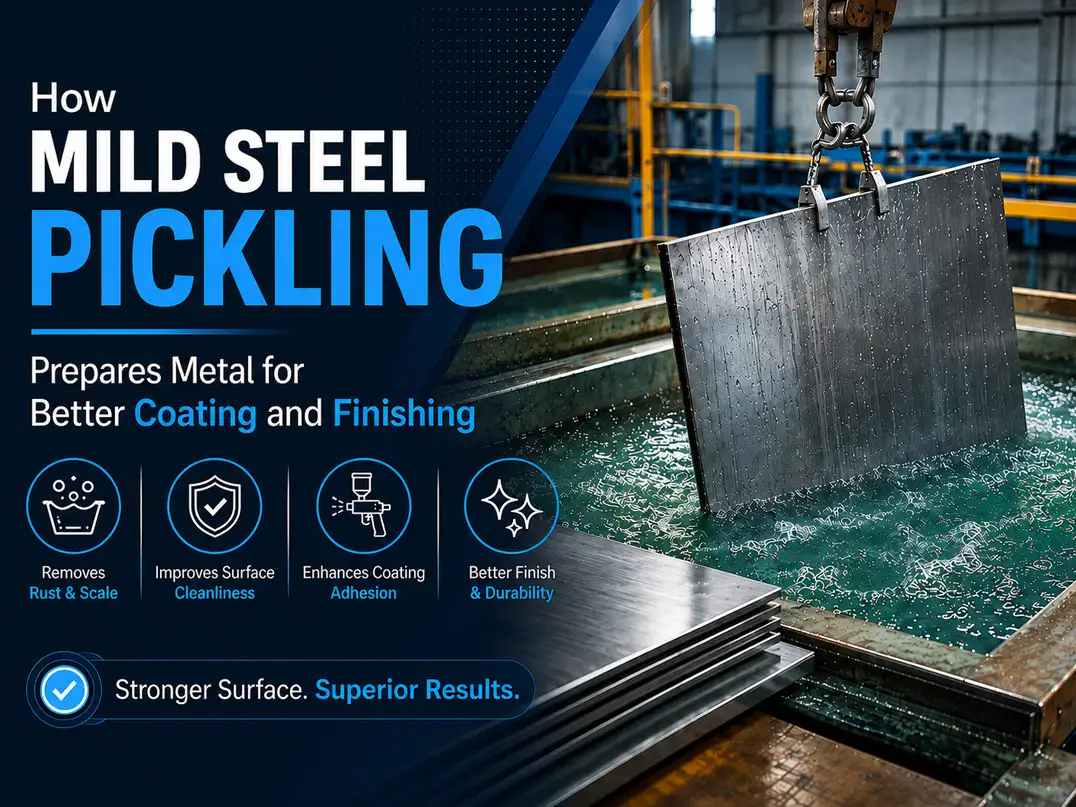
The strength and durability of Zinc coating begins before it is applied. The condition of mild steel fed into a galvanizing plant or surface treatment line will directly impact the quality, adhesion and durability of the final finish. Coating may not bond well due to dirt, grease, mill scale, rust, and oxides. The mild steel pickling process is an important step in surface preparation where this comes into Process.
In the pickling process, steel is treated with acid solution to clean the surface of steel and remove the oxides and the oxide layer from the surface of steel. It is effectively applied when integrated in a pre-treatment line to provide a more reactive surface for the next coating or galvanising step.
Pickling is necessary for the mild steel coating because, after manufacturing, fabrication or storage steel surfaces seldom have a perfect finish. Oxidation can occur due to exposure to air & moisture, and manufacturing processes may result in the presence of mill scale, rust and other contaminants.
When these impurities are left, they can form bad joints between the steel and the steel's protective coating. This can lead to uneven coverage, poor adhesion, and peeling or decreased corrosion protection.
Pickling tackles this problem with the help of chemical to remove any oxide layers and exposing a cleaner surface of the metal. This will ensure uniformity of the subsequent treatment and provide a better base for the protective coating.
Pickling is typically performed as an integrated set of pre-treatment steps. It depends on the type of steel, condition of the surface, the concentration of chemicals, the temperature and the desired finish.
Often, steel must be degreased or cleaned prior to pickling to eliminate oil, grease, dirt, and other surface contaminants during fabrication or other process. This enables the acidic solution to be in closer contact with the surface of the metal.
Cleaned steel is dipped in an appropriate acid solution in the Pickling tank (Chemical Tank). The acid will breakdown and remove rust, mill scale and metal oxides from the surface.
The material is then rinsed after pickling to completely remove any traces of acid and dissolved substances. Good rinsing is critical to avoid unwanted chemical carryover to the next treatment stage.
The cleaned steel gets transferred for the fluxing, drying, coating or galvanizing, depending on the application. Good surface preparation aids the formation of a uniform protective film of molten zinc on the steel in hot dip galvanizing.
The greatest benefit of good pickling is to clean the surface. Extraction of oxides and scale enables uniform interaction with the steel in the following treatment.
An appropriately prepared surface can help to achieve:
The treated components will last longer.
Pickling is a significant process in galvanizing plants since the surface preparation affects the quality of the zinc coating. The pre-treatment tanks supplied by Radadia Engineering are corrosion-resistant and can be customised according to the industrial requirements for pre-treatment processes like degreasing, pickling, rinsing and fluxing.
More than Just choosing acid bath is needed for efficient pickling operation. The operational performance is affected by the tank construction, chemical resistance, dimensions, process flow, temperature management, material handling, and safety considerations.
Appropriate containment and fume management are also important for pickling due to corrosive chemicals and acidic fumes. Radadia Engineering offers acid fume enclosures, acid fume extraction systems and industrial fume extraction solutions that are designed to and manage acidic fumes in industrial environments.
While steel pickling could be a part of the overall finishing line, the effect of pickling would be felt in the overall coating process. It removes scale, rust and oxides, ready for more reliable and consistent surface treatment of steel. Any manufacturer looking for an efficient galvanizing plant and pre-treatment line, Pre-treatment tanks or Chemical tanks can greatly benefit to create a reliable production.
Want to upgrade your galvanizing plant or pre-treatment plant? Talk with Radadia Engineering about tailored equipment and total plant solutions to fit your operations.