
A Fasteners Galvanizing Plant is built to apply a protective zinc coating on small steel parts such as bolts, nuts, washers, screws, and other threaded hardware using the hot-dip galvanizing technique. During this process, the fasteners are cleaned and then immersed in a bath of molten zinc to create a corrosion-resistant coating on the steel surface.
Since these components are generally small but manufactured in large quantities, the galvanizing operation typically uses a spin or centrifuge galvanizing system. In this method, fasteners are placed inside perforated baskets, dipped into molten zinc, and then rotated rapidly in a centrifuge to throw off excess zinc. This spinning action helps produce a smooth and uniform coating while keeping the threads clear and maintaining accurate fastener dimensions.
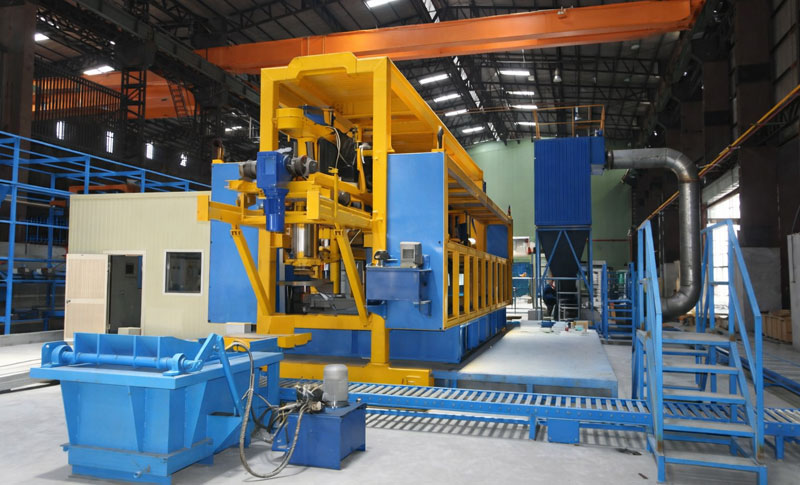
Fastener galvanizing plants require smaller galvanizing kettles compared with structural galvanizing plants because the parts are small and processed in baskets.
Typical Kettle Size Range:
| Plant Capacity | Typical Kettle Size |
|---|---|
| Small fastener galvanizing plant | 0.6 m × 0.3 m × 0.6 m |
| Medium fastener plant | 1.5 m × 0.6 m × 0.8 m |
| Large fastener galvanizing plant | 3.5 m × 1.0 m × 1.2 m |
Mini galvanizing plants for bolts and nuts can start from 600 × 300 × 600 mm kettles and extend up to about 3500 × 1000 × 1200 mm depending on production capacity.
I. Spin Galvanizing System
Fasteners require a centrifugal spin process after dipping.
Key equipment:
The spinning process removes excess zinc and ensures correct coating thickness.
II. Zinc Bath Temperature
The molten zinc kettle must maintain a stable temperature.
Typical temperature range:
Stable temperature helps produce uniform coating thickness.
III. Thread Protection
Fasteners have threaded surfaces that must remain functional after galvanizing.
Important considerations:
This prevents threads from getting blocked by excess zinc.
Proper pre-treatment ensures high-quality galvanizing.
IV. Centrifugal Drying and Cooling
After galvanizing and spinning, fasteners must be cooled.
Cooling methods:
V. Production Capacity Planning
Fastener galvanizing plants usually process large batch quantities.
Typical production capacity:
| Plant Size | Capacity |
|---|---|
| Small plant | 3,000 – 5,000 tons/year |
| Medium plant | 10,000 – 15,000 tons/year |
| Large plant | 20,000+ tons/year |